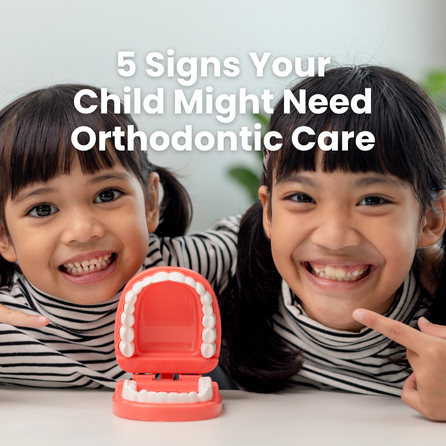
Orthodontic issues aren’t just for teens; early detection can make treatment easier. The American Association of Orthodontists recommends a first check-up by age 7. While not every child will need treatment right away, recognizing early signs can help ensure your child’s teeth and jaw develop properly.
Here are five signs to watch for:
1. Early or Late Loss of Baby Teeth
Children typically begin losing baby teeth around age 6. If baby teeth fall out much earlier or later than expected, it may affect how permanent teeth come in. Orthodontists can evaluate whether there is enough space for adult teeth and guide proper development if needed.
2. Difficulty Chewing or Biting
If your child complains about pain while chewing or frequently struggles to bite into foods, it could indicate a bite problem. Properly aligned teeth should allow for comfortable chewing and biting.
3. Mouth Breathing
Regular mouth breathing—especially during sleep—can sometimes affect how a child’s jaw and facial structures develop. Orthodontists often look for this habit because it may contribute to alignment or growth issues over time.
4. Jaw Shifting, Clicking, or Popping
If your child’s jaw shifts to one side or makes clicking or popping sounds when opening or closing, it could signal a misaligned bite. An orthodontic evaluation can help determine whether the jaw and teeth are developing properly.
5. Crowded, Crooked, or Protruding Teeth
One of the most noticeable signs is crowded or crooked teeth. Teeth that overlap or stick out may indicate that there isn’t enough space in the jaw for permanent teeth to come in correctly. Early orthodontic monitoring can help guide teeth into healthier positions.
When in Doubt, Get an Evaluation
Even if your child isn’t ready for treatment yet, an orthodontist can monitor their growth and recommend the best time to start care if needed. Early check-ups can sometimes prevent more complicated treatment later on.